CoopPlanner

Planning tool Β· US Extension Standards

Chicken Coop
Calculator

Space, perches, nest boxes and feed calculated for your exact flock size. Technical values verified against US Cooperative Extension guidelines and poultry welfare research.

Backyard chickens in a well-designed coop
EU 1999/74/CEAlabama Coop. Ext.Poultry Hub AUDefra UKRSPCA 2024

Enter a number between 1 and 500

Quick select:
Domestic production Β· 27 hens

Results for 27 hensDomestic production

01 β€” Space required

1161
sq ft

Recommended outdoor

43 sq ft/hen β€” recommended outdoor space

270 sq ftEU legal minimum10 sq ft/hen β€” recommended minimum
108 sq ftIndoor coop area4 sq ft/hen β€” standard indoor coop space
27.8 Γ— 41.7 ftSuggested outdoor dimensions
8.5 Γ— 12.8 ftSuggested indoor dimensions

02 β€” Perches

24.8
ft
Total length
11 in/hen Β· US Extension guidelines
7
bars
Bars needed (4 ft each)
24
in
Recommended height from floor

03 β€” Nest boxes

7
nest boxes
Nest boxes
1 box per 4 hens β€” standard ratio
12Γ—12Γ—14
in
Dimensions per box
18–24
in
Recommended mounting height

04 β€” Materials

139
ft
Perimeter mesh
22
posts
Support posts
30
lbs/month
Coop bedding

05 β€” Ventilation required

1555
sq in
Minimum ventilation area
ASHRAE 62.2 adapted for domestic poultry
10.8
sq ft
In square metres
25
openings
Recommended openings (20Γ—20 cm)

05 β€” Feed & water

47.3
lbs/week
Weekly feed
Daily range: 3.5–4.5 oz /hen/day
202.5
lbs/month
Monthly feed
1.89
gal/day
Daily water
3.5 gal/day in summer (max)

Source: USDA Β· Alabama Cooperative Extension

06 β€” Estimated production

132
eggs/week
Domestic average (70% rate)
161
eggs/week
Pure breed optimum (85% rate)
6864
eggs/year
Average annual estimate

Source: Purina Mills Β· USDA Chickens & Eggs 2025

08 β€” Estimated annual cost

$1480
/year

Total operating cost ($ US 2025)

Cost per egg: 22Β’

$1109Annual feed
$101Annual bedding
$270Health/year
$2032Estimated setup cost

Indicative. Feed: $0.45/lb Β· Bedding: $0.28/lb Β· Pullet: $18/bird Β· Construction: $12/sq ft indoor.

09 β€” Monthly production calendar

Estimated month-by-month production incorporating the natural moult cycle and winter daylight reduction in the northern hemisphere.

Jan55%
Feb65%
Mar80%
Apr88%
May90%
Jun88%
Jul80%
Aug75%
Sep60%
Oct35%
Nov25%
Dec40%

Pattern based on: Purina Mills Layer Management Guide Β· University of Georgia Poultry Science Β· US climate data

Technical guide

How to read the results

The EU legal minimum is not the welfare optimum. Operating at the legal threshold in a backyard coop generates documented behavioural problems.

Outdoor space: minimum vs. recommended

The recommended value (43 sq ft/hen) is ideal for backyard flocks. The minimum (10 sq ft/hen) is the absolute limit. Operating below the recommended value produces feather pecking, stress and drops in laying.

Perches: why 11 inches matters

US Extension guidelines set 10–12 inches per hen. The 11 inches figure is the validated midpoint. Bars are counted in 4 ft modules β€” standard timber length β€” to allow purchase without cuts. Functional height: 18–24 inches.

Feed: the 3.5–4.5 oz range and its drivers

Alabama Cooperative Extension sets the average at 4.0 oz/hen/day for laying hens. The lower bound (3.5 oz) applies with pasture access. The upper bound (4.5 oz) corresponds to cold climates or larger breeds.

Production: domestic rate vs. optimum

The 70% figure is the average domestic laying rate without artificial light management, documented by Purina Mills. The 85% applies to pure laying breeds (ISA Brown, Leghorn, Lohmann Brown) with active light management. Actual rates depend on flock age and season.

Water: the most underestimated factor

Normal consumption is 0.07 gallons/hen/day. In summer it can reach 0.13 gallons, the maximum documented by Watkins & Tabler (University of Arkansas). Water deprivation for 24 hours reduces laying by 30%.

Ventilation guide

Coop ventilation: the most overlooked variable

Ammonia above 25 ppm reduces laying rate, damages respiratory mucosa and favours infections. Proper ventilation costs nothing and has a direct impact on production.

The 1:10 floor area rule

For every 10 sq ft of indoor floor area you need at least 1 sq ft of total ventilation opening. The calculator applies the standard conversion of 1 sq ft of ventilation per 10 sq ft of floor area.

Cross-ventilation: the only type that works

Openings must be on opposite walls, with air inlets low (12–24 in) and outlets at the ridge or high on the wall. Natural convection removes ammonia at zero energy cost. Avoid draughts directly onto the perches.

Winter: ventilation without draughts

The most common mistake is sealing the coop completely in winter. Relative humidity above 70% causes more problems than cold does. The solution is to reduce openings to a third but keep them always open, with baffles preventing direct airflow onto the birds.

Summer: managing heat stress

Above 27Β°C hens reduce feed intake and laying. Above 38Β°C the risk of mortality is real. In summer maximise openings, provide outdoor shade, cool the water, and if possible install misters in the shade. Water consumption can triple.

Cost analysis

What does keeping hens actually cost?

The calculation nobody does before building a coop. Figures are indicative for the US 2025 based on verified market prices. The cost-per-egg figure lets you compare objectively with shop prices.

Feed is 70–75% of running costs

At current layer pellet prices ($0.40–$0.50/lb), one hen costs approximately $40–$45 per year in feed alone. With access to pasture, home-grown grain or quality kitchen scraps, you can reduce this by 15–25%.

The setup cost: why people get it wrong

The classic mistake is building a coop too small and expanding it later at twice the cost. Basic DIY construction runs around $10–15/sq ft of indoor space. A coop for 6 hens (24 sq ft indoor) costs roughly $250–300 for the shelter alone.

Health: what every manual underestimates

An annual veterinary check or medical treatments per hen cost $10. Preventive deworming, coccidiosis treatment and basic vaccines are essential. Budgeting $10/hen/year is conservative but realistic.

Return on investment: when does it make sense?

At organic egg prices ($4.50–$6.00/dozen), 6 hens produce 200–250 eggs on average annually, worth $80–$120. The running cost for 6 hens is around $250–$300/year. Home production is not cheaper than buying, but offers full traceability and certainty about animal welfare.

Moult & seasonality

The moult: when it happens, how long it lasts, how to manage it

The annual moult is the reset of the reproductive cycle. A well-fed hen during the moult recovers production in 8–12 weeks. A poorly managed one can take 20. The difference is protein and light management.

When it happens and why

The natural moult is triggered by the reduction in daylight hours, typically in September–October in the northern hemisphere. It is a physiological process of feather renewal in which the body prioritises keratin for feathers over egg production. Output drops to 10–30% or stops entirely for 6–12 weeks.

Nutrition during the moult

Increase feed protein to 18–20% (vs the standard 16–17%) during the 8 weeks of active moulting. The limiting amino acid is methionine, essential for keratin synthesis. Some keepers add wheat germ or sunflower seeds as a source of methionine and vitamin E.

Light management to protect production

If the coop has artificial lighting you can prevent moulting by maintaining 14–16 hours of total light (natural + artificial). However, this practice reduces the hens' total productive lifespan. For domestic use without production pressure, allowing moulting is preferable as it ensures a second season of higher quality.

Breeds that moult best

High-production breeds (ISA Brown, Lohmann) have faster but harder moults. Traditional breeds (Sussex, Plymouth Rock) moult gradually and recover more slowly but with better final plumage quality. Marans barely stop laying during the moult, though they reduce to 30–40%.

Breed guide

Laying breeds for backyard coops

Production figures vary significantly by breed. These are verified numbers for the six breeds most widely used in Europe and North America for domestic egg production.

Chicken breed variety for backyard flocks
ISA BrownFrance
300–320eggs/year
2.1 kgadult weight
Dociletemperament

The benchmark laying breed, equally suited to backyard settings. Matures at 18–19 weeks and holds high rates through the first year. From year two, production typically drops to 220–250 eggs.

White LeghornItaly
280–300eggs/year
1.9 kgadult weight
Activetemperament

Mediterranean breed with the best feed-to-egg conversion of any common layer. Nervous in confined spaces; needs at least 4 mΒ² of outdoor run to display normal behaviour.

Lohmann BrownGermany
290–310eggs/year
2.0 kgadult weight
Calmtemperament

Hybrid developed for commercial production but adapts very well to free-range systems. Consistent brown shell. One of the best feed-conversion ratios among dual-purpose hybrids.

Plymouth RockUSA
200–220eggs/year
3.2 kgadult weight
Very gentletemperament

Dual-purpose breed (meat and eggs) especially recommended for families with children. Moderate but steady production over 3–4 years. Handles cold and wet winters well.

SussexUK
220–250eggs/year
2.9 kgadult weight
Sociabletemperament

One of the oldest domestic breeds in northern Europe. Good forager: reduces feed consumption by 15–20% with pasture access. Robust against common poultry diseases.

MaransFrance
150–180eggs/year
3.0 kgadult weight
Calmtemperament

Known for its very dark brown (near-chocolate) shell. Low production but highly prized in artisan markets. Excellent wet-weather tolerance; originates from the Atlantic coast of south-west France.

Quick reference

Data by number of hens

Pre-calculated values for the most common backyard flock sizes.

Data by number of hens
HensOutdoor rec. (sq ft)Indoor (sq ft)Perches (ft)Nest boxesFeed/week (lbs)Water/day (gal)Eggs/week
3129122.815.30.2115
4172163.7170.2820
6258245.5210.50.4229
8344327.32140.5639
10430409.2317.50.749
1251648113210.8459
156456013.8426.31.0574
208608018.35351.498
25107510022.9743.81.75123
30129012027.5852.52.1147

Eggs/week at 70% average domestic laying rate Β· Purina Mills Β· USDA 2025

Recommended equipment

Supplies for your coop

Technical selection based on your calculator results. Updated prices on Amazon.

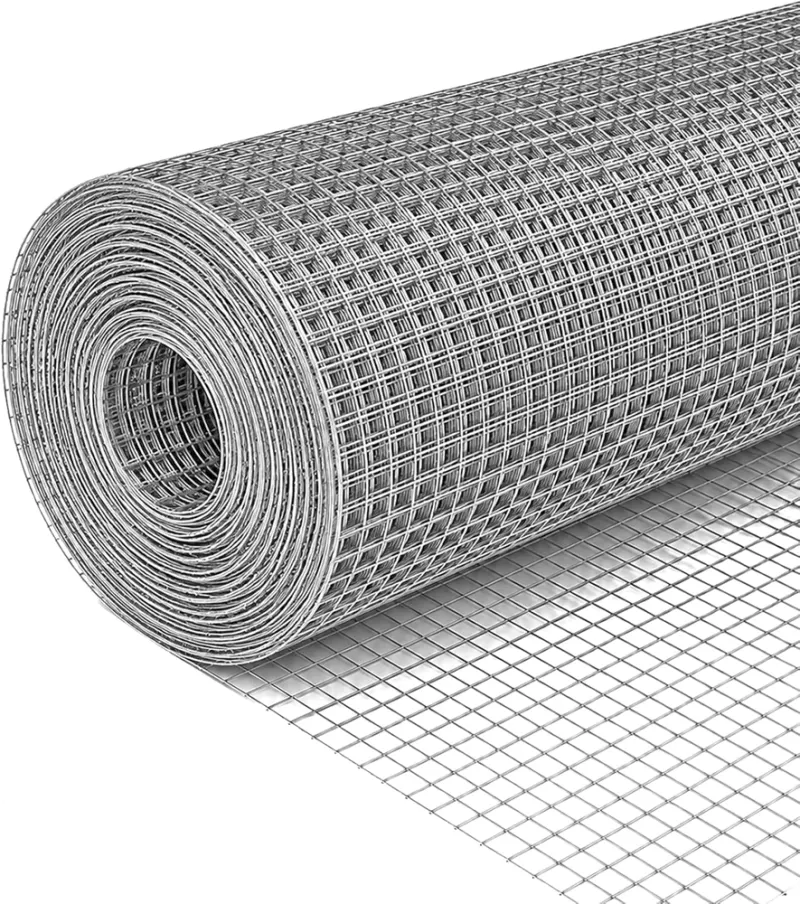
YARDGARD 1/2 in. Galvanized Hardware Cloth (19 Gauge)
Fencing19 Gauge / 1/2" x 1/2" Mesh / 36 in. x 50 ft.

YARDGARD 1/2 in. Galvanized Hardware Cloth (19 Gauge)

The industry standard for predator-proofing chicken runs. 19-gauge galvanized steel mesh with 1/2-inch openings stops raccoons, weasels, and snakes cold. Unlike chicken wire, its welded grid will not unravel over time. Bury the skirt 12 in. underground to deter digging predators.

See price on Amazon
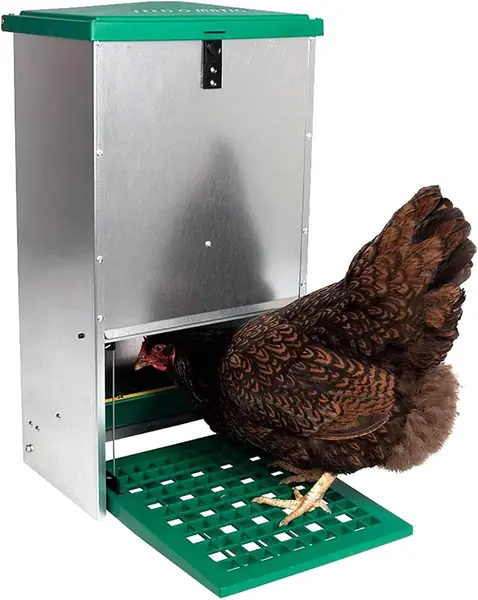
Grandpa's Feeders Automatic Chicken Feeder
FeedingGalvanized Steel / 20 lb Capacity / Step-on Mechanism

Grandpa's Feeders Automatic Chicken Feeder

Grandpa's Feeder is the gold standard of pest-proof poultry feeders. A weighted step plate opens the lid only when a chicken steps on it, completely excluding wild birds, rats, and mice. Weather-sealed construction keeps feed dry for weeks. Holds up to 20 lb -- perfect for small to medium flocks.

See price on Amazon
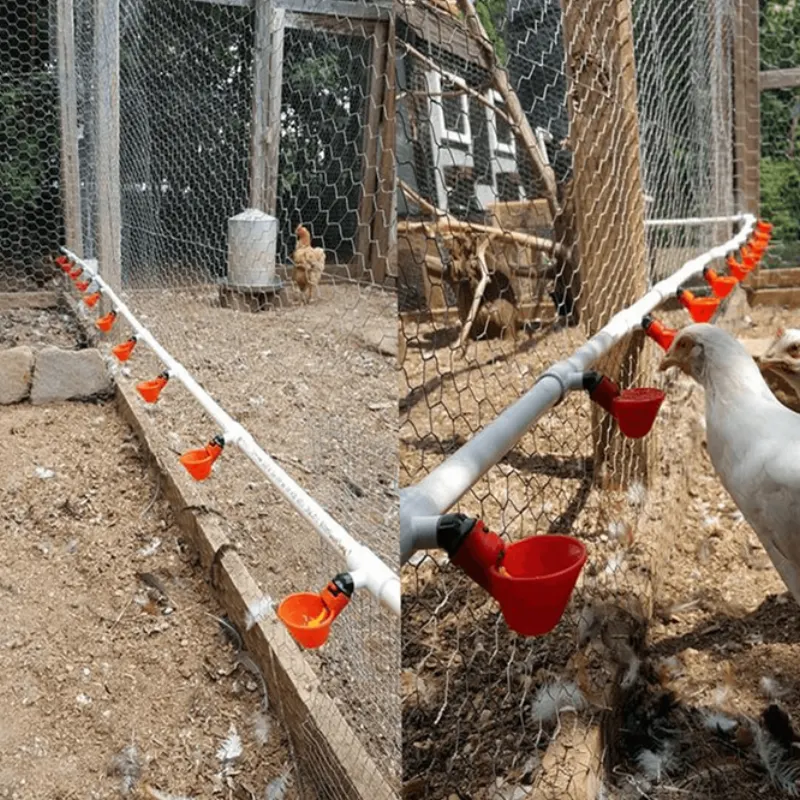
RentACoop Automatic Chicken Waterer with Cups
WaterBPA-Free Plastic / 5 Gallon (19 L) / Stainless Auto-Cups

RentACoop Automatic Chicken Waterer with Cups

A clean-water gravity system that eliminates daily refilling. Auto-filling stainless-steel cups release water only when a hen pecks the trigger, preventing algae growth and droppings contamination. BPA-free, food-grade bucket included. Perfect for backyard flocks of 4-12 hens.

See price on Amazon
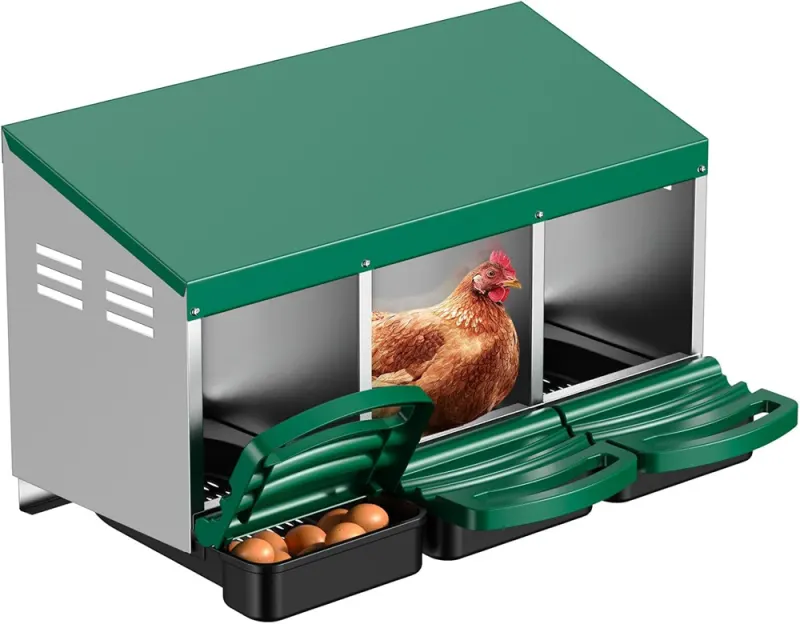
Homestead Essentials Roll-Away Metal Nesting Box
Nest boxesGalvanized Iron / 3 Compartments / Roll-Away Drawer

Homestead Essentials Roll-Away Metal Nesting Box

A commercial-grade roll-away nesting box that solves egg-eating hens for good. The angled floor gently guides freshly laid eggs into a padded, covered collection drawer where they stay clean and unbroken. Three spacious compartments suit up to 12 laying hens.

See price on Amazon
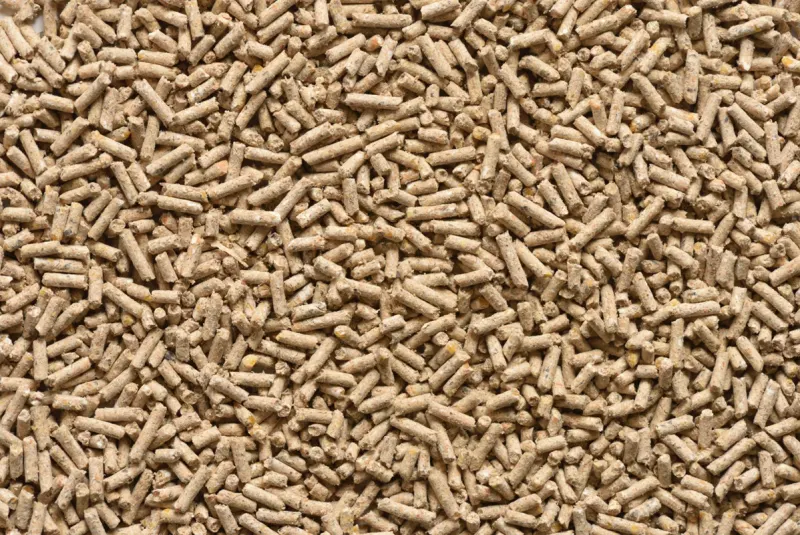
Manna Pro Oyster Shell Layer Supplement + Layer Pellets
Feed30 lb Bag / 16% Protein / Oyster Shell Calcium / Non-GMO

Manna Pro Oyster Shell Layer Supplement + Layer Pellets

Manna Pro is Amazon USA's best-reviewed poultry brand. Their layer pellets deliver 16% protein and are enriched with oyster shell calcium for stronger eggshells, vitamins D3 and E for immune health, and natural marigold extract for rich golden yolks. Suitable for hens from 18 weeks.

See price on Amazon
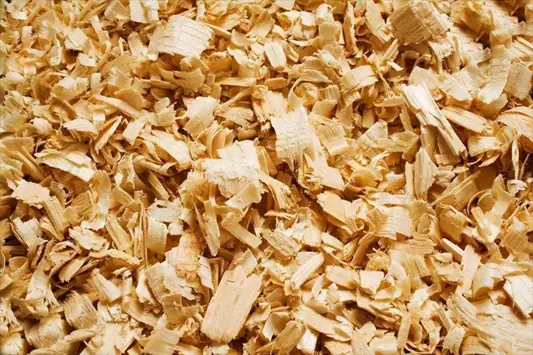
Small Pet Select Premium Pine Shavings Chicken Bedding
Bedding100% Natural Pine / 141L Expanded Volume / Dust-Screened

Small Pet Select Premium Pine Shavings Chicken Bedding

Kiln-dried, dust-screened pine shavings that expand to massive volume once opened -- up to 4 cubic feet per bale. The low-dust formula protects the sensitive respiratory tracts of your hens. Natural pine resins provide mild antimicrobial properties. Composts beautifully into rich garden fertilizer.

See price on Amazon

Frequently asked questions

Most asked questions

How much space does a hen need?

Each hen needs at least 43 sq ft of outdoor space for free-range access and 4 sq ft of indoor floor space in the coop. US extension recommendations suggest a minimum of 10 sq ft of outdoor space per bird.

How many hens do I need for a family?

For a family of 4 that eats eggs regularly, 4–6 laying hens produce 15–25 eggs per week β€” enough to cover regular use plus a surplus to give away.

How many nest boxes do I need?

One nest box per 4 hens. Too few causes queuing, fighting and floor eggs. Too many and hens start roosting in them overnight, soiling the nests and the eggs.

How much feed does a hen eat per day?

Between 3.5 and 4.5 ounces daily. The verified average under standard domestic conditions is 4.0 oz (Alabama Cooperative Extension). With ample pasture access this can fall to 3 oz. In cold climates or for larger breeds it may exceed 4.5 oz.

How high should perches be?

Between 18 and 24 inches from the floor. With multiple staggered perches, keep at least 12 inches of horizontal gap between them and 8 inches from the wall to prevent droppings from soiling the bar below.

How much water does a hen drink per day?

0.07 gallons (9 fl oz) under normal laying conditions. In summer this can reach 0.13 gallons (17 fl oz). Water deprivation for more than 24 hours reduces laying rate by up to 30% for several weeks.

How many eggs does a hen lay per year?

Depends on breed and management. Pure laying breeds (ISA Brown, Leghorn, Lohmann Brown) produce 280–300 eggs per year with light management. Mixed domestic breeds without light control produce 180–220 eggs annually.

Is it legal to keep hens at home in the US?

Regulations are determined by local municipal ordinances and zoning laws. Many cities allow a small flock (typically 4-6 hens, no roosters) in backyards. Check with your city clerk or local zoning board before installing.